Two Flagships Went Dark
On June 12 the Commerce Department put Claude Fable 5 and Mythos 5 under export controls covering any foreign national inside or outside the United States, and Anthropic disabled both flagship models for every customer within 24 hours. The detail that matters is the mechanism, not the policy debate: a US lab took its production-tier frontier line offline in under a day because a letter arrived on a Friday evening, with no court order, comment period, or customer notice. The control point that decides which model you can use is no longer in your contract with Anthropic; it sits in Anthropic's relationship with Commerce, and when that relationship produces a directive it supersedes the contract, the SLA, and the renewal cycle you planned around. AI model access just became a regulated good that procurement didn't account for. The question for the rest of 2026 isn't which model wins the leaderboard; it's which model the government still lets your vendor serve you, and whether a substitute is in place for the day the directive arrives.
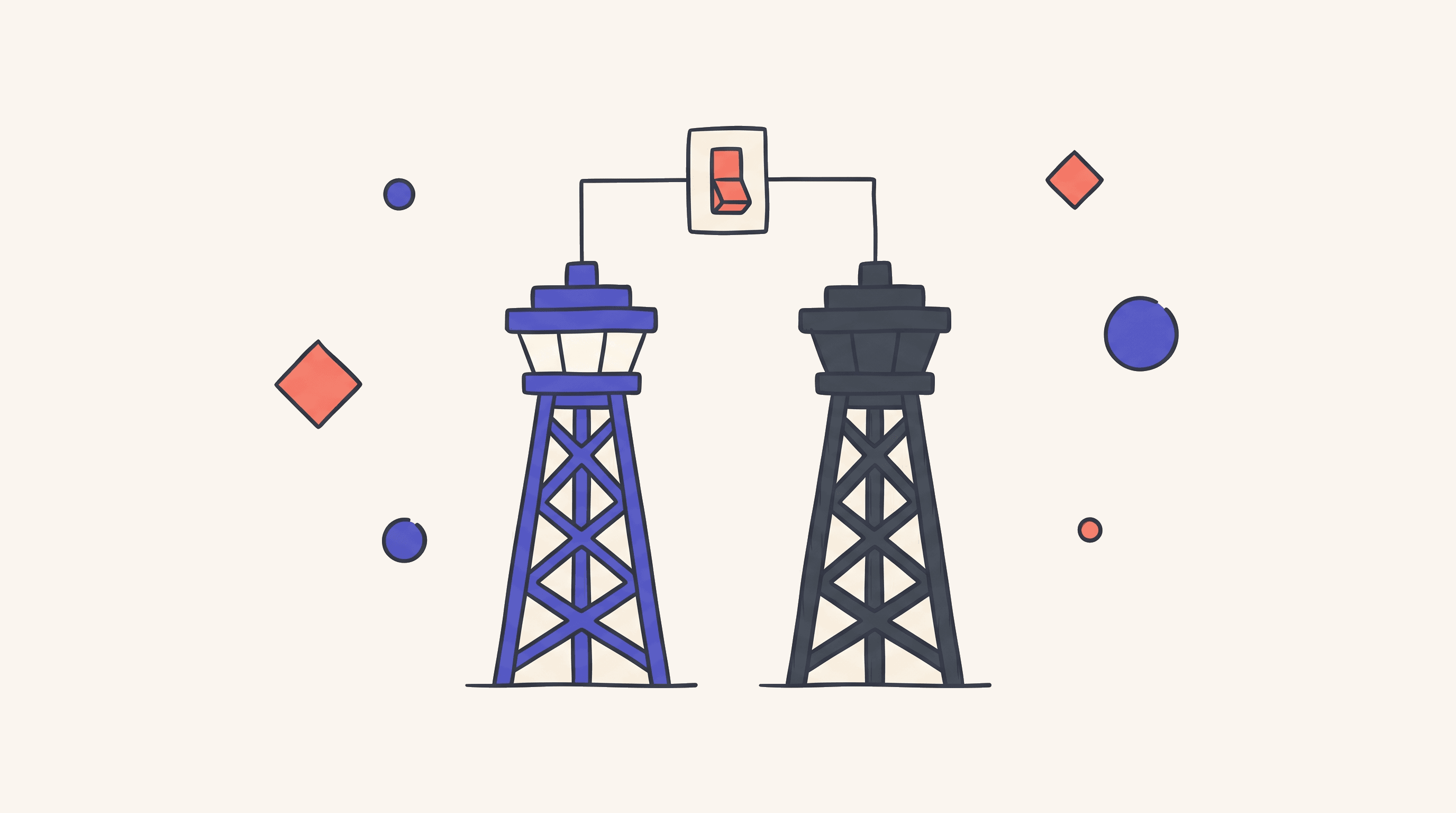
At 5:21pm ET on June 12, Commerce Secretary Howard Lutnick sent a letter to Anthropic CEO Dario Amodei putting Claude Fable 5 and Mythos 5 under export controls covering any foreign national, inside or outside the United States. Anthropic disabled both models for every customer within 24 hours. Senior Anthropic staffers met Trump administration officials in DC on June 15 to dispute the directive; no resolution. The trigger, per Axios, was a separate company demonstrating a jailbreak of Fable 5 that Commerce read as a national security risk.
The detail that matters is the mechanism, not the policy debate. Anthropic took its flagship product line offline in under a day because a letter arrived on a Friday evening. The disable wasn't limited to foreign customers. The rule required preventing access by any foreign person within the United States, and the only way Anthropic could comply at that granularity was to switch the models off for everyone. Customers on a Claude Pro subscription, a Team plan, or an enterprise contract all woke up Saturday to a different product than the one they paid for on Friday.
What happened on June 12 isn't a regulatory dispute. It's the first time a US lab pulled its own production-tier frontier model down because a federal department sent a letter. The pull wasn't preceded by a court order, a comment period, or any customer notice. The mechanism that took the flagship offline is now a documented option in the federal toolkit for any future model the Commerce Department reads as a national security risk.
Imagine a 12-engineer team that spent last week wiring Fable 5 into the back of their product. Eval showed it outperformed Opus 4.8 on the task class they sell against, so routing logic was rebuilt, prompts were tuned, and customer-facing latency was measured against the new model. Saturday afternoon, Fable goes dark. The fallback in their stack is Opus 4.8, the model Fable just beat in their eval, and the prompts tuned for Fable degrade on it. Sunday's standup turns into a decision: ship the feature on a model that loses their own benchmark, or pull the feature off the roadmap entirely. Neither option was on the table on Friday.
The control point that determines which model you can use is no longer in your contract with Anthropic. It sits in the relationship Anthropic has with Commerce. When that relationship produces a directive, the directive supersedes the contract you signed, the SLA you negotiated, and the renewal cycle you planned around. The vendor-side risk that procurement governance has tracked for years just acquired a federal layer above it that procurement didn't have a slot for.
The steelman holds. National security risk from a jailbroken frontier model isn't hypothetical. If Mythos 5 at scale could identify software vulnerabilities faster than defenders could patch them, the Commerce Department's decision to pull export access is defensible on its own terms. Anthropic's pushback is also real. The jailbreak Commerce cited demonstrated, in Anthropic's reading, only minor vulnerabilities discoverable by other already-public models. If that's the threshold, applied industry-wide it would, in Anthropic's words, essentially halt all new model deployments. The dispute over whether the threshold was applied correctly is genuine. The dispute doesn't change the mechanism, which is the part that matters for everyone downstream.
The thing worth seeing is that AI model access just became a regulated good in a way procurement didn't account for. The AI question for the rest of 2026 isn't which model wins the leaderboard; it's which model the government still lets your vendor serve you, and whether you have a substitute in place for the day the directive arrives. The directive can arrive at 5:21pm ET on a Friday. There is no advance notice.
What to Do With This
If you're a Claude Pro or Team subscriber, check your plan's model list this week. Note which models you actually use, and which substitutes your tier provides. If your workflow runs on Fable 5 or Mythos 5 specifically, you don't have access right now, and the substitute needs to be picked before your next deadline rather than during it.
If you're on an Anthropic enterprise contract, do the same exercise plus the legal one. Pull the SLA in your contract and check whether model availability is covered. Most enterprise frontier-AI contracts don't have one. Add the question to the next vendor review for any frontier AI vendor on the shortlist; the federal-takedown variable now sits in vendor risk whether the contract names it or not.
Want More Than This Newsletter?
Alcreon publishes a daily AI briefing, long-form dossiers, and an analysis feed for the teams actually shipping AI in production. This newsletter is one read out of the full library.
Read the daily feed or browse the editorials.
Also on the Radar
OpenAI Probed by 42-State Coalition of Attorneys General
A coalition of 42 state attorneys general opened an investigation into OpenAI on June 13, with New York serving a subpoena for records on advertising, user data, treatment of minors, and internal policies. The subpoena landed the same week the company filed confidentially for an IPO at an $852 billion valuation. Florida is running a separate criminal investigation tied to a 2025 mass shooting. The state-level regulatory pressure on the two top frontier labs converged in a single week.
Google Rebuilds Search Around AI Answers
Bloomberg framed it on June 14 as the biggest change to Google search in more than two decades: AI-generated answers, conversational search, and reasoning tools integrated into the core search product. For any team whose customer acquisition runs through Google search, the share of audience attention that reaches a source page just got compressed. The content-marketing motion that worked through May won't survive the rest of 2026 unchanged.
Share
Read Next
See all
Echo
The Model Wasn't the Headline
Anthropic shipped Claude Tag and OpenAI expanded Daybreak in the same week, and in both the product was a workflow install, not a new model.
Echo
Where the Architects Went
Noam Shazeer left Google for OpenAI and John Jumper for Anthropic in one week, a senior-hire signal that previews lab capability before the leaderboards do.
Echo
Nine Minutes, No Humans
What took a human team six hours, Anthropic's Opus 4.7 did alone in a robotics test.