The Unbundling Week
Two layers of the AI stack unbundled this week: labs shipped workflow installs over models, and rivals now rent compute from one landlord.
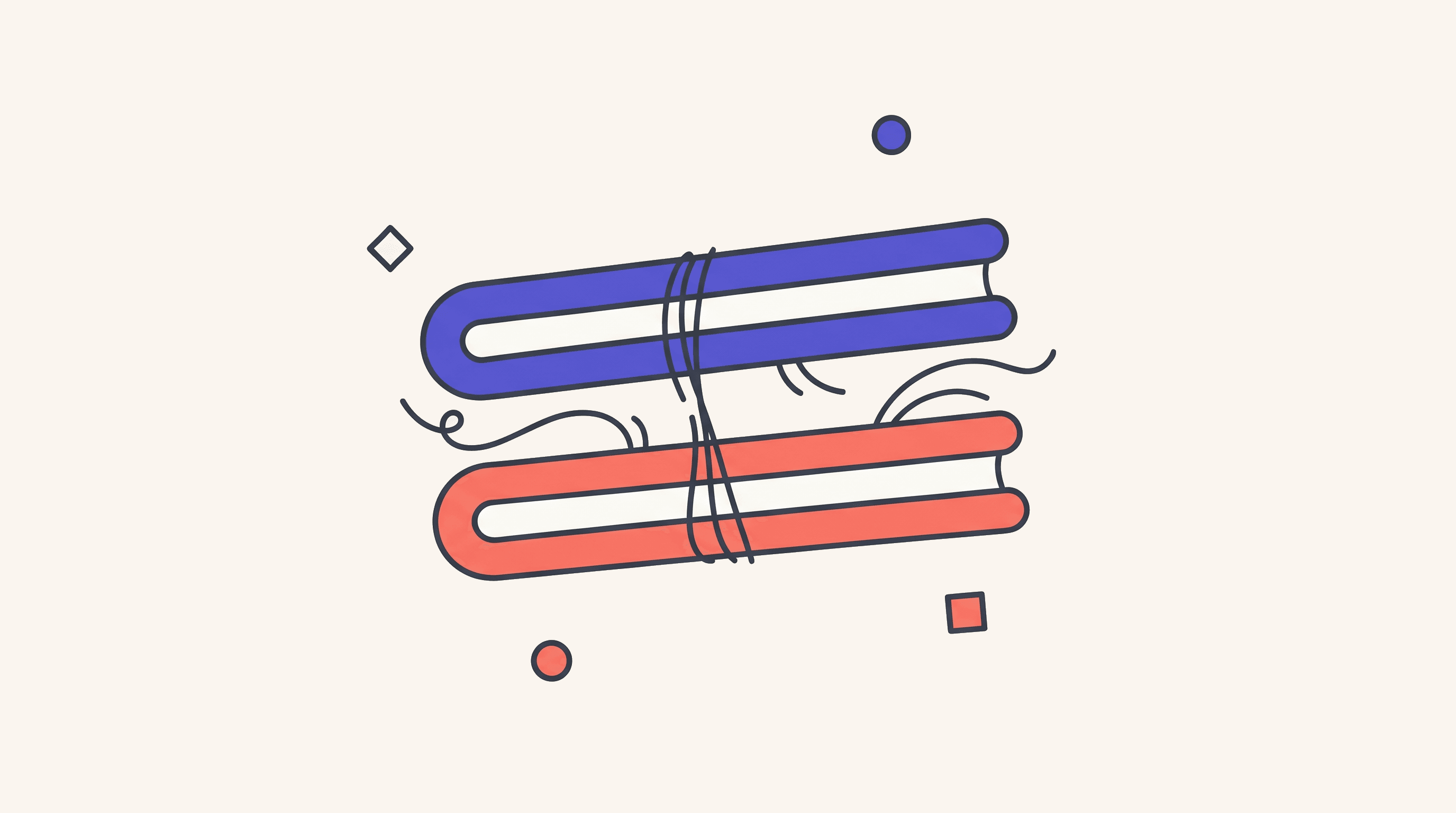
Two layers of the AI stack came apart this week, both inside 48 hours. At the install layer, Anthropic shipped Claude Tag for Slack and OpenAI expanded Daybreak across the security stack. Neither announcement led with a new model. At the substrate layer, SpaceX signed Reflection AI to a customer roster that already includes Anthropic and Google, decoupling compute from the model brands it used to come bundled with. The model card stopped being the procurement question on both layers.
Two Installs, No Models
Two of the largest AI labs shipped a product this week, and in neither announcement was the product a model. Anthropic introduced Claude Tag on June 23, an @Claude install on Slack where Claude joins channels as a team member that anyone can hand a task to. One day earlier, OpenAI expanded its Daybreak program with the full release of GPT-5.5-Cyber, a Codex Security update, the Patch the Planet open-source initiative, and a Cyber Partner Program. In both releases the news is the workflow shape, not the capability frontier.
The disclosures behind each ship were specific. Claude Tag is in beta for Enterprise and Team customers, runs on Opus 4.8 underneath, and replaces Anthropic's existing Claude in Slack app. Anthropic also disclosed that 65% of its product team's code is now written through the internal version of the tool. Daybreak's GPT-5.5-Cyber scored 85.6% on CyberGym against 81.8% for the standard model. Codex Security has scanned 30 million commits across 30,000 codebases since March, logging 500,000 findings as fixed. Patch the Planet enrolled 9 open-source projects with Trail of Bits, including cURL, Go, and Python. CrowdStrike, Sophos, and Fortinet now ship GPT-5.5-Cyber inside their own products.
Look at what's absent from both announcements. Neither lab named a new flagship model, and neither headline led with a benchmark. Anthropic's announcement spends most of its language describing how a team tags @Claude inside a Slack channel and what tools the model gets access to. OpenAI's announcement names CrowdStrike, Sophos, and Fortinet before it names a model. Both read more like enterprise software install guides than frontier capability releases.
Frontier model capability stopped being the bottleneck for most of the work teams want to ship. Anthropic, OpenAI, and Google all sit inside a tight band on every public benchmark, leadership rotates each quarter, and the model layer is at "good enough" for most teams' work. Integration is what's left to compete on. Claude Tag answers where an agent lives and what tools it can touch. The equivalent for Daybreak is what AI defending against AI looks like when it's plumbed into the security stack a company already runs. The model is what runs underneath.
This shift isn't permanent. Both labs have next-generation flagships in training, and when each ships, the capability headline will return for a quarter. Workflow products run on whatever model is current, though, and once a team's install settles into a Slack channel or a partner SOC, the model behind the install becomes swappable in a way it isn't right now. The integration surface is what teams will be stuck with going forward, not the model.
Buyers now ask questions in a different order. The procurement question used to start with which model leads; this week it starts with which install fits the team. A solo developer or three-person team picks the install that sits where the work already happens. A 200-seat company picks the integration surface that matches its existing security or productivity stack. The model behind each install matters less than the install itself, because the lab is going to swap the model in over time anyway.
Lab strategy runs through the install layer now. By the time the next model card drops, the workflow product will already be inside the org.
What to Do With This
If you're picking AI tooling as an individual or a small team, look at where the agent will actually live and what existing channel or stack it sits in. The Slack-tagged agent and the security-vendor partner integration aren't substitutes; they answer different workflow questions. Pick the one your team already runs in.
If you lead a team that uses AI across several workflows, name the single workflow you'd most want an autonomous teammate inside. The lab whose product fits that workflow is your default pick for the next quarter, regardless of which model leads the next benchmark.
If you own procurement at any scale, install shape and integration surface are now the lock-in. Run the procurement question through "which lab's workflow matches our org" before "which model is best." The model is what your lab is going to swap out; the install is what stays.
Four Labs, One Landlord
SpaceX signed a compute lease with Reflection AI on June 22. The open-source AI lab, last valued at $25 billion, will pay SpaceX $150 million a month starting July 1 for Nvidia GB300 capacity at Colossus 2 near Memphis, totaling about $6.3 billion if the deal runs through 2029. After three months, either side can exit on 90 days' notice. The news isn't the deal itself; it's the customer roster Reflection just joined.
SpaceX has been signing this kind of deal since spring. Anthropic took all of Colossus 1 in May, the full 220,000-GPU, 300-megawatt Memphis facility. Google agreed to pay SpaceX $920 million a month on June 5 for capacity at Colossus 2 through June 2029, citing surging Gemini Enterprise demand. SpaceX agreed to acquire Cursor for $60 billion in all-stock on June 16. Committed compute revenue from outside customers now exceeds $80 billion through 2029.
What's missing from this customer list is competitive alignment. Anthropic competes with Google on models, but both pay SpaceX for the GPUs they train on. Reflection's whole pitch is that closed-model providers like Anthropic and OpenAI have lock-in risk, and Reflection now runs on the same Colossus 2 facility Google does. SpaceX itself competes with every one of them on Grok, and none of those relationships could coexist a year ago.
For most of the prior eighteen months, model and compute were bundled together: Anthropic meant AWS, Google meant Google Cloud, OpenAI meant Microsoft Azure. That pairing came undone this quarter, and compute became a commodity that any tier-one infrastructure player can sell. The tier-one infrastructure list just added a fifth name. Compute providers no longer have to pick sides on models, and labs no longer have to pick sides on infrastructure. The competitive set on models and the competitive set on compute are now separate questions.
The hyperscaler positioning isn't proven at the operating-margin level. SpaceX's AI segment lost $2.5 billion on $818 million of revenue in Q1 2026, and the company committed $7.7 billion of its $10.1 billion quarterly capex to AI infrastructure. The other neocloud names, CoreWeave and Nebius, sit lower on the tier list, and the market priced them down on the days SpaceX's deals landed. The case isn't that SpaceX replaced AWS this quarter; it's that SpaceX joined the row where AWS, Azure, Google Cloud, and Oracle sit, on the strength of customer scale and committed capacity.
For buyers the practical change is who you call when the model vendor changes its mind. Anthropic recently cut off Fable and Mythos access in some categories under a US government export directive, and Reflection's whole pitch hinges on the argument that closed-model dependency is a procurement risk a team can offload by self-hosting. Whether or not Reflection ships a frontier-tier open-source model first, the procurement decision underneath has split in two. Pick the model the team trusts, and pick a hyperscaler that can deliver capacity when the model layer changes shape.
Compute decoupled from model this quarter. The hyperscaler tier added a fifth name, and the procurement question reordered with it.
What to Do With This
If you're picking AI tooling as an individual or a small team, the takeaway is concentration risk. The kind of API cutoff Anthropic ran on Fable and Mythos can happen to any closed-model vendor. Pick a backup vendor you've actually tested on a different lab's stack, and route a small percentage of your traffic through it so the switching cost is rehearsed before you need it.
If you lead a team that uses AI across several workflows, compute and model are now separable line items. If your team self-hosts an open-source model, the hyperscaler tier just added a fifth name to RFP against. If your team runs on commercial APIs, your lab's compute backing is a diligence question for your annual vendor review.
If you own procurement at any scale, don't bundle multi-year compute commitments with model choices. The model your team relies on this quarter is unlikely to be the model you rely on in 2027. The compute commitment usually outlasts that decision, and the compute vendor and the model vendor don't have to be the same company.
Want More Than This Newsletter?
Alcreon publishes a daily AI briefing, long-form dossiers, and an analysis feed for the teams actually shipping AI in production. This newsletter is one read out of the full library.
Read the daily feed or browse the editorials.
Also on the Radar
OpenAI and Broadcom Unveil Jalapeño, OpenAI's First Custom Chip
OpenAI and Broadcom unveiled Jalapeño on June 24, OpenAI's first Intelligence Processor, an ASIC built for LLM inference and co-designed in nine months. Initial deployment is targeted by end of 2026. While Anthropic and Google rent compute from SpaceX, OpenAI is taking the opposite path and building its own silicon. Two compute strategies, same week.
Two More DeepMind Researchers Headed for Anthropic
Bloomberg reported on June 24 that Jonas Adler and Alexander Pritzel are leaving Google DeepMind for Anthropic. Adler worked on Google's AI coding effort; Pritzel ran Gemini pretraining; both also contributed to AlphaFold alongside Jumper. That's four senior DeepMind departures in six days, after Shazeer to OpenAI on June 18 and Jumper to Anthropic on June 20.
Share
Read Next
See all
Echo
The Model Wasn't the Headline
Anthropic shipped Claude Tag and OpenAI expanded Daybreak in the same week, and in both the product was a workflow install, not a new model.
Echo
Where the Architects Went
Noam Shazeer left Google for OpenAI and John Jumper for Anthropic in one week, a senior-hire signal that previews lab capability before the leaderboards do.
Echo
Nine Minutes, No Humans
What took a human team six hours, Anthropic's Opus 4.7 did alone in a robotics test.