The Repricing Week
This week the AI economy got repriced from three sides at once. Apollo Global Management told the market it now screens every software investment against an AI-disruption framework, institutionalizing a substitution screen the whole private-credit industry is under pressure to run. OpenAI confidentially filed its S-1 eight days after Anthropic filed its own, putting both frontier labs pre-IPO at the same time and quietly closing the negotiating window enterprise buyers held last quarter. And the Class of 2026 booed AI at commencements across the country, the first labor cohort openly hostile to the technology the AI labs need to hire and sell to. Three constituencies, one direction: AI's economic position is being marked to a different value than it carried last quarter, and the question for the rest of 2026 is whether your own company has run the same repricing before someone else runs it for you.
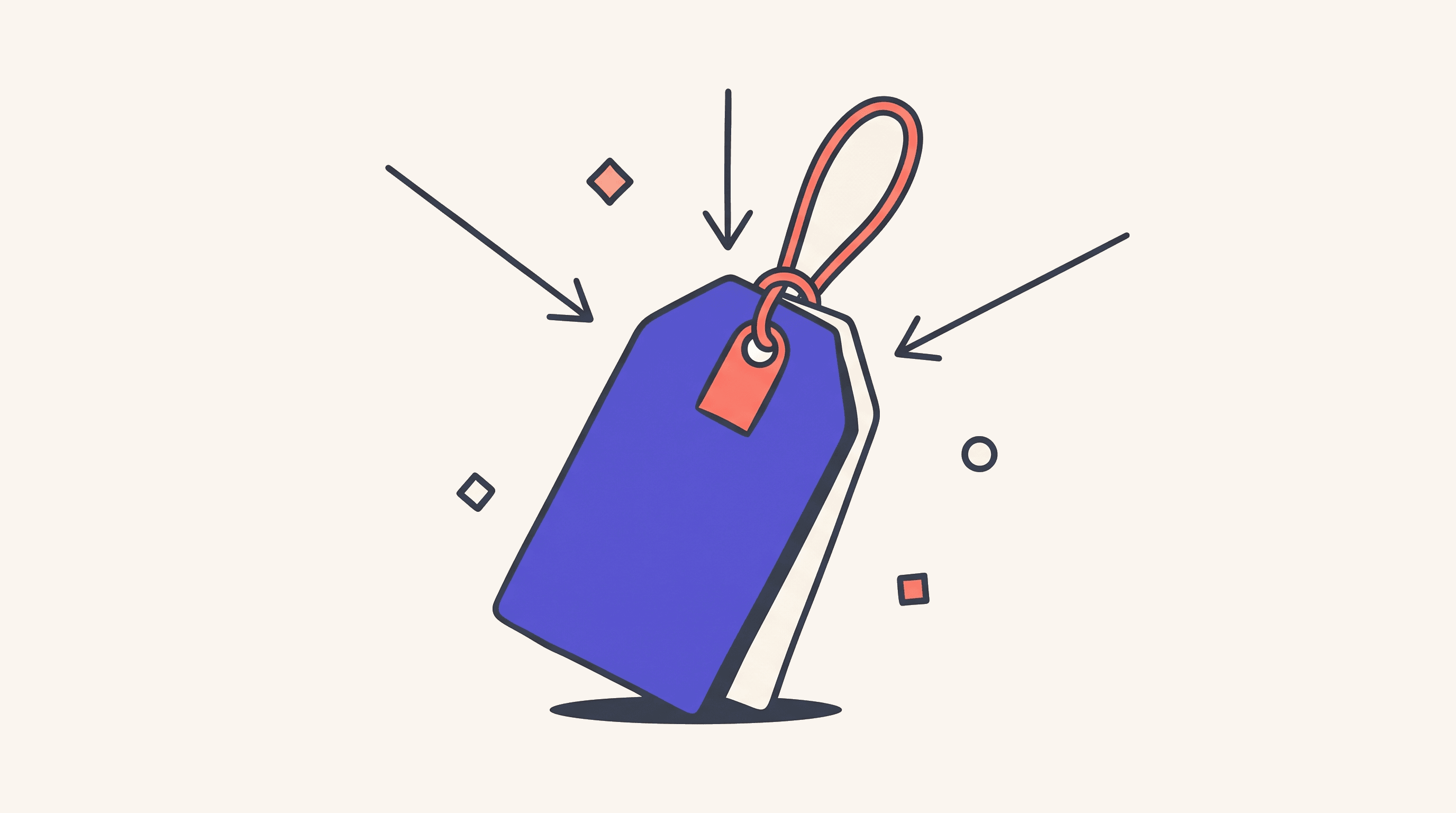
This week the AI economy got repriced from three different sides. Apollo Global Management told the market it now screens every software investment against an AI-disruption framework. OpenAI confidentially filed its S-1, eight days after Anthropic filed its own. And the labor pool entering the workforce booed AI at commencements across the country. Three constituencies, one direction: AI's economic position is being marked to a different value than it had last quarter.
Apollo's New Question
Apollo Global Management's head of thematic investing Rob Bittencourt told Bloomberg on June 11 that the firm is screening every new software investment against an AI-disruption framework with 12 to 14 categories. Bittencourt called AI "probably the most profound platform shift the industry has ever faced." Apollo's own Shutterfly portfolio had to sweeten its debt terms two days earlier to clear the market, as investors started pricing AI exposure into the existing book.
The detail that matters is that Apollo isn't running this screen because of one bad deal. They're running it because the $1.8 trillion private credit industry has started asking the same question and Apollo is moving first to have a defensible answer. The 12 to 14 categories sort software by workflow type and rank each by how substitutable the workflow is by AI. Categories rated high-disruption are the same categories every SaaS sales motion was overweighted on three years ago: standardized workflow software, basic analytics, document processing, low-touch customer support.
What Apollo published isn't a one-firm policy. It's the buy-side institutionalizing an AI-substitution screen that every LP-backed PE shop is now under pressure to run. The asymmetry: SaaS companies in high-disruption categories face higher cost of capital this year, and SaaS companies serving workflows AI complements (judgment-heavy, relationship-bound, regulatory) face lower cost of capital.
The thing worth seeing is that the capital markets are pricing AI as a substitution risk to the SaaS category before most SaaS companies have priced it to themselves. Apollo's category list isn't proprietary insight; it's the same workflow taxonomy any AI buyer can run in an afternoon. The question for the rest of 2026 isn't whether AI substitution affects SaaS pricing; it's whether your company has done the same exercise Apollo just did, before your next financing round forces the conversation on someone else's terms.
What to Do With This
Run the substitution screen on your own product this quarter. For each major workflow your software handles, ask which AI-assisted version of that workflow would land inside a customer organization in the next 18 months, and whether the customer's economics would still favor your product when that version exists. Surface the answers to your CFO and board before your next financing conversation. The buy-side already has its version of the answer; the seller side needs its own.
Both Labs Are Going Public
OpenAI confidentially filed its draft S-1 on June 10, eight days after Anthropic filed on June 1. For the first time, both top frontier AI labs are simultaneously pre-IPO. Last private valuations: Anthropic around $965 billion, OpenAI around $852 billion.
The detail that matters is what changes once an S-1 is on file. Public companies disclose more, and the disclosures travel. Once either lab amends to public, the other lab's customers can read its quarterly revenue, customer concentration, capex by category, executive comp, and stated risk factors. The competitive read each lab has been keeping private for years lands in a 10-K every quarter.
What Anthropic and OpenAI just did isn't a finance event. It's the start of an eighteen-month period where both labs operate under underwriter scrutiny and both will defer the kinds of aggressive renegotiation, surprise roadmap pivots, and pricing experiments that look bad in an S-1 amendment. Public-track companies do not casually rewrite enterprise contracts the quarter before they price the IPO.
The thing worth seeing is that the bargaining power enterprise buyers had three months ago, when both labs were private and competing aggressively for marquee accounts, is closing. The procurement question for the rest of 2026 isn't whether to standardize on Anthropic or OpenAI; it's whether your renewal is timed to land before either S-1 amendment hits the public file, or after both labs are public and the comparative shopping landscape clarifies. The middle window is the worst window.
What to Do With This
If you're mid-renewal on a frontier AI contract this quarter, pick one of two paths and commit. Close fast on current terms before the S-1 amendments land, accepting that you may leave value on the table compared to a post-IPO comparison. Or pause the negotiation, hold your current contract, and wait until both labs are public so you can negotiate from disclosed financials.
Don't try to run a multi-month negotiation across the amendment window itself. You will be negotiating against a counterparty whose hands are constrained by an SEC review process you can't see.
The Class That Booed
The Class of 2026 has loudly booed AI at multiple commencements this spring, Bloomberg reported on June 10. At UCF on May 8, real estate exec Gloria Caulfield called AI "the next industrial revolution" and the boos started immediately. At MTSU on May 9, record exec Scott Borchetta got booed mid-speech and replied "Deal with it. It's a tool." Eric Schmidt got booed at the University of Arizona. Microsoft's Brad Smith published a 3,000-word response naming five "durable human skills" AI can't replace.
The detail that matters is what's behind the boos. Federal Reserve research found U.S. programming job growth fell roughly 50% after ChatGPT launched in November 2022, with researchers estimating about 500,000 developer jobs that would otherwise have existed never materialized. The students booing at commencement aren't reacting to a "robots take our jobs" headline. They're reacting to four years of watching friends and seniors who couldn't land the dev roles their majors were built to feed.
What Brad Smith published isn't a defense of AI. It's the canonical industry move when a labor cohort reacts: reframe the threat as a personal-development opportunity (be curious, be creative, be courageous). That move worked for many cohorts when the displaced labor pool was small or geographically diffuse. The 2026 cohort is neither.
The asymmetry is the point. A labor cohort that's openly hostile to AI is the labor cohort the AI labs need to hire and the AI-adopting companies need to deploy products to. The industry's hiring and adoption math now has a friction term it didn't have last year. A hiring loss of one candidate per booed commencement is invisible; a hiring loss of the top 5% of every dev-track graduating class for two cohorts in a row is a structural problem.
The thing worth seeing is that the loudest pro-AI voices at every campus this spring were industry executives and tech VPs, and the loudest anti-AI voices were the students they were trying to hire. The hiring question for the rest of 2026 isn't whether AI helps recruiting; it's whether the cohort you're recruiting still wants to build the thing you're selling.
What to Do With This
If you're hiring 2026 grads this fall, audit your campus recruiting deck against this reaction. Lead with what AI doesn't replace in the role, not what AI accelerates. Frame the team around the human work that's still load-bearing. Internal product messaging that wins a Big Tech earnings call can flame out in a campus recruiting visit, and the cost of that misread is the candidates you don't even hear from.
Want More Than This Newsletter?
Alcreon publishes a daily AI briefing, long-form dossiers, and an analysis feed for the teams actually shipping AI in production. This newsletter is one read out of the full library.
Read the daily feed or browse the editorials.
Also on the Radar
Anthropic Ships Claude Fable 5 and Claude Mythos 5
Anthropic released Claude Fable 5 and Claude Mythos 5 on June 9, both priced at $10 per million input tokens and $50 per million output. Mythos 5 continues the Project Glasswing security-research line that now reaches more than 200 partner organizations across power, water, healthcare, communications, and hardware. The pricing slot is notable: $50 output at flagship tier puts the new Mythos in direct comparison with Opus 4.8, with the security-research positioning as the differentiator.
OpenAI and Oracle Close a Cloud Commitment
OpenAI announced on June 11 that its frontier models and Codex are now available through Oracle Cloud Infrastructure as part of a multi-year compute commitment. The deal adds Oracle to the OpenAI hyperscaler stack alongside Microsoft Azure, which has carried OpenAI's primary compute since the original 2019 partnership. For any enterprise running OpenAI through Azure today, the Oracle addition is the first multi-source disclosure since Microsoft's exclusivity wound down last year.
Share
Read Next
See all
Echo
The Model Wasn't the Headline
Anthropic shipped Claude Tag and OpenAI expanded Daybreak in the same week, and in both the product was a workflow install, not a new model.
Echo
Where the Architects Went
Noam Shazeer left Google for OpenAI and John Jumper for Anthropic in one week, a senior-hire signal that previews lab capability before the leaderboards do.
Echo
Nine Minutes, No Humans
What took a human team six hours, Anthropic's Opus 4.7 did alone in a robotics test.