Bringing the latest Gemini models to Apple developers
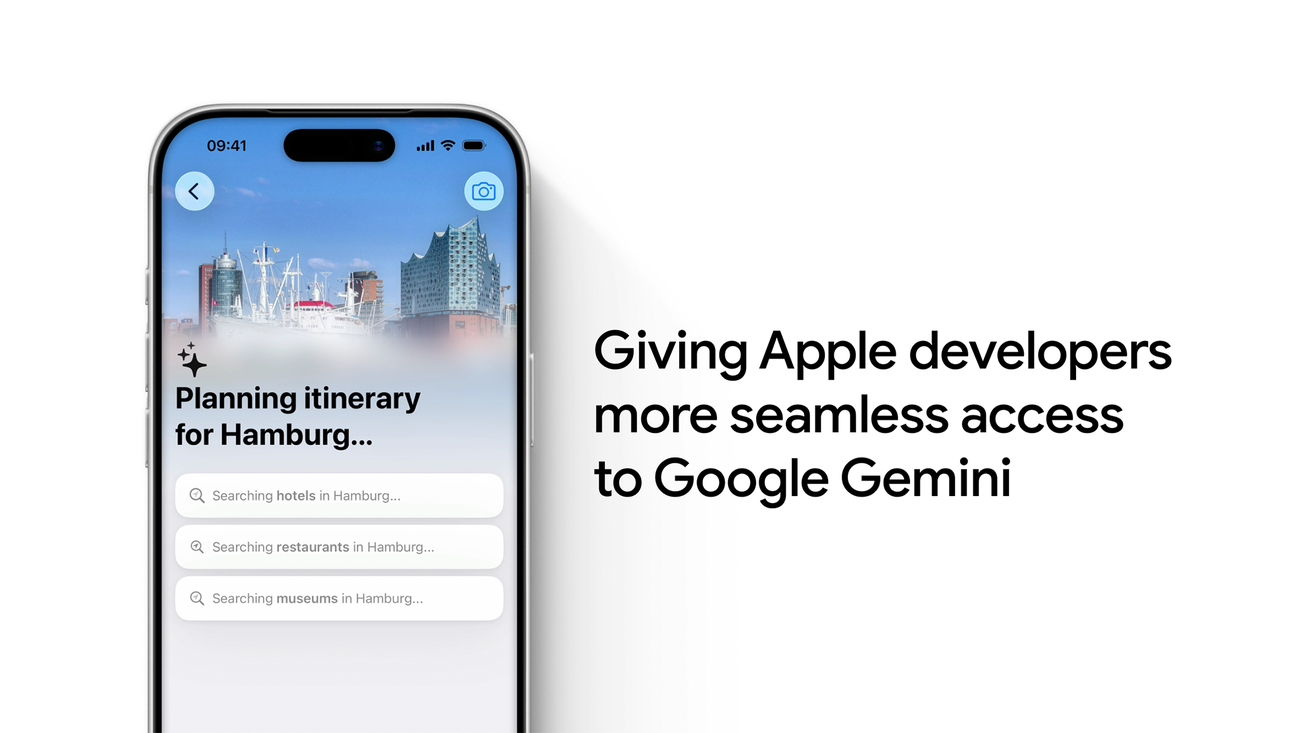
Apple developers can now call Gemini through Apple’s native Foundation Models framework — Starting with iOS 27, macOS 27, iPadOS 27, visionOS 27, and watchOS 27, Gemini is exposed via the new public LanguageModel protocol through the Firebase Apple SDK.
TL;DR
Apple developers can now call Gemini through Apple’s native Foundation Models framework — Starting with iOS 27, macOS 27, iPadOS 27, visionOS 27, and watchOS 27, Gemini is exposed via the new public LanguageModel protocol through the Firebase Apple SDK.
Gemini and Apple’s on-device model now sit behind the same API surface — If you already use Foundation Models, switching to Gemini is basically a small code change—swap the model instance—so you can move between local and cloud inference based on cost, latency, and agentic app needs.
Firebase AI Logic removes the usual backend work — Google says developers can add the latest Gemini models directly into iOS, macOS, iPadOS, and visionOS apps without building and maintaining a separate server, while Firebase App Check helps protect those model-access APIs from abuse.
Gemini is now built into Xcode for multi-step coding work — After onboarding through Xcode’s Intelligence settings panel, developers can use Gemini natively to review code, fix bugs, and build features without bouncing between tools or windows.
Google is offering both solo-dev and enterprise auth paths — Individual developers can use a self-serve Gemini API key from Google AI Studio with free and paid tiers, while enterprises can use Gemini Enterprise Agent Platform for dedicated corporate quotas and data privacy controls.
Read the Original
Continue at blog.googleShare
Keep Reading
Make Alcreon Yours
Tune your feedFive quick questions, and the feed ranks what matters to you first.Or just get notified
The weekly Echo. Signal worth keeping in your inbox.
Every new piece, announced on X.
Read Next
See all
Echo
The Token Bill Comes Due
Uber confirmed that every employee now operates under a $1,500 monthly cap per agentic coding tool, Claude Code and Cursor counted separately.

Echo
The Open-Weights Question
NVIDIA used its June 1 GTC Taipei keynote to announce Nemotron 3 Ultra, a 550-billion-parameter open-weights model scoring 48 on Artificial Analysis's Intelligence Index.

Echo
The Maintainer Bill
Daniel Stenberg, curl's lead maintainer, reports that high-quality AI-assisted vulnerability reports are now arriving at four to five times the 2024 rate.